History
From Cheyenne, restored.
Big Boy 4014 is one of twenty-five 4-8-8-4 articulated locomotives built for Union Pacific between 1941 and 1944. Number 4014 is the only one of them ever returned to operating condition. This page is a starting point for understanding how a 1.2-million-pound machine was coaxed back to life seventy-five years after its last run, and where it fits in the longer arc of American steam.
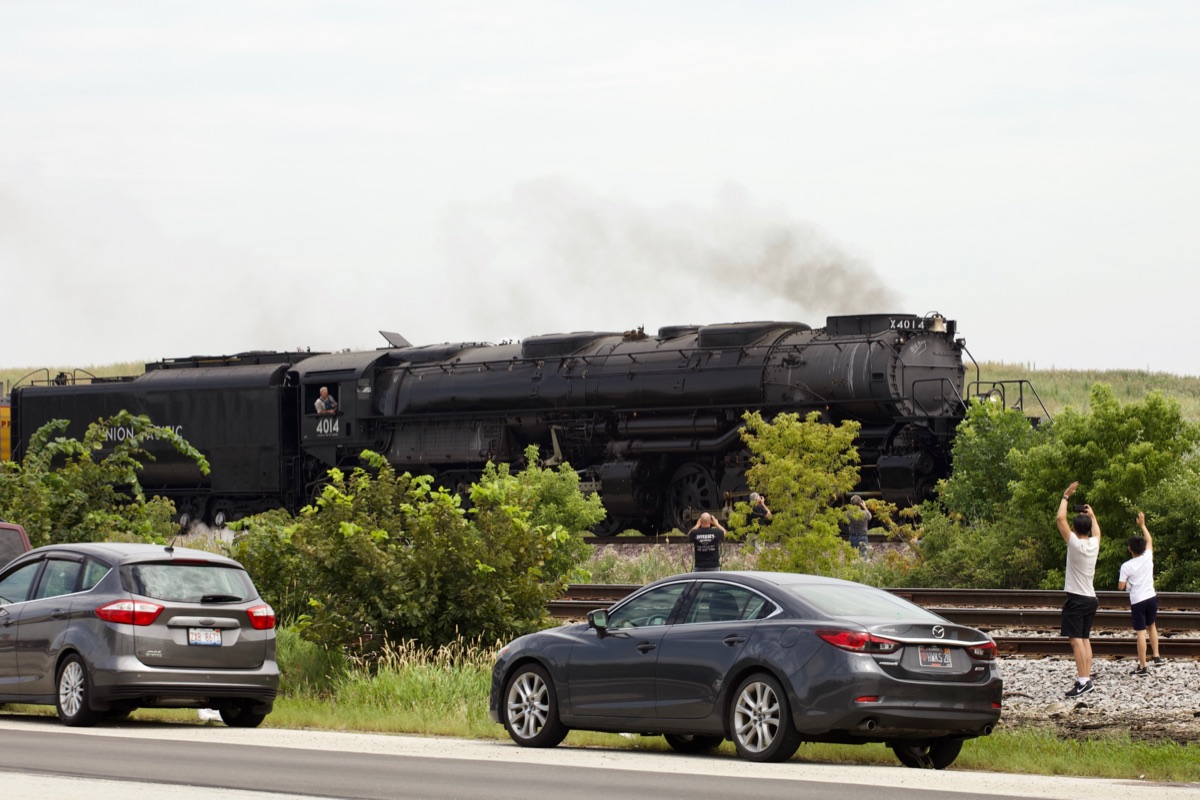
The Big Boy class
The Big Boys were designed for one specific job: hauling heavy freight over the steep, twisty Wahsatch grade between Ogden, Utah and Green River, Wyoming, where helper engines had been slowing things down for decades. The American Locomotive Company in Schenectady, New York delivered the first batch in 1941. The class was articulated in two driving sections under a single boiler — that’s the “4-8-8-4” in the Whyte notation: four leading wheels, two sets of eight driving wheels, four trailing wheels.
Twenty-five units were built across two orders. By the late 1950s, dieselization had taken most of their work; the last revenue Big Boy run was in 1962, with all units stored or scrapped soon after. Eight survived as static museum pieces. Number 4014 was donated to the Railway & Locomotive Historical Society in 1962 and displayed at the RailGiants Museum in Pomona, California for half a century.
The 4014 restoration
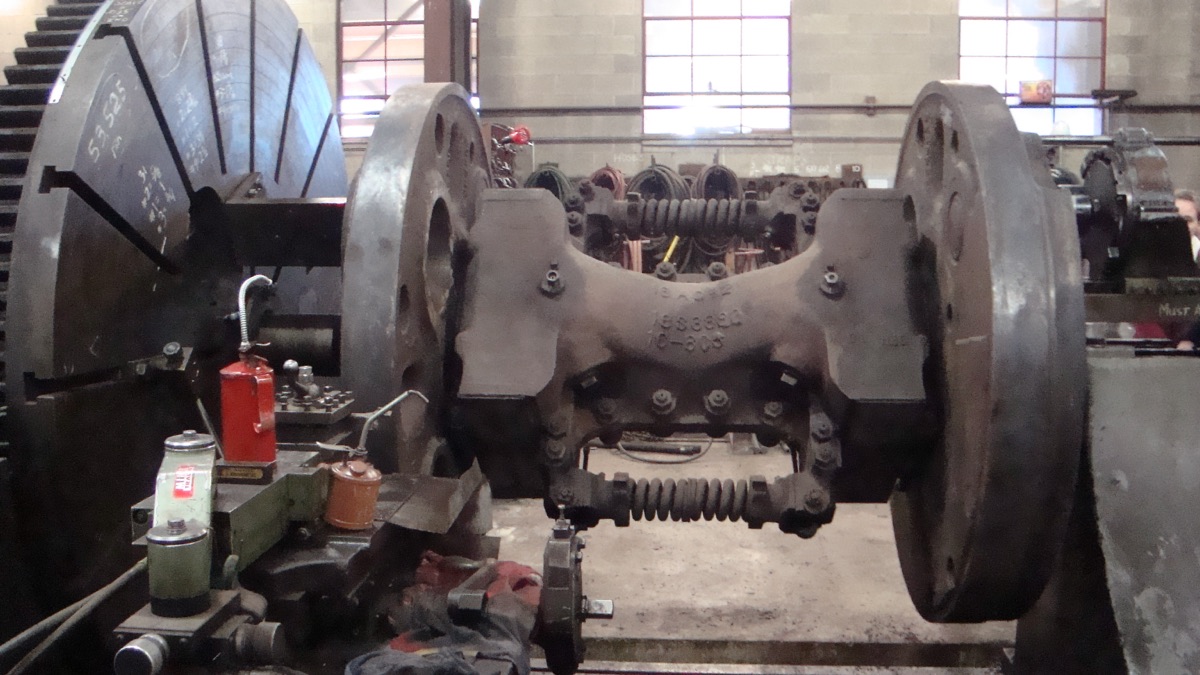
Union Pacific reacquired 4014 in 2013 and trucked it 1,200 miles back to its old home at the Cheyenne, Wyoming steam shop. The restoration took roughly five years. The headline change was a conversion from coal firing to oil firing, which dramatically simplifies servicing and reduces emissions; the cab and tender were modified to support the new fuel system. Bearings, flues, valves, and the air-brake system were rebuilt or replaced. Wheel sets were inspected and turned. The locomotive emerged in 2019 in time for the 150th anniversary of the Transcontinental Railroad’s completion at Promontory Summit, Utah.
Since then 4014 has run a series of multi-state public tours under Union Pacific’s Heritage Operations program. The 250th-Anniversary tour this site tracks is the most ambitious yet — coast to coast.
Why steam still matters
It’s tempting to treat steam as a museum subject, but the Big Boy program is engineering preservation in the active sense — keeping the skills, parts inventories, and operational know-how alive. Boiler inspectors, machinists who can pour Babbitt bearings, and people who know how to nurse a 1940s lubrication system through a hot June afternoon are not produced by any current trade school. The tour is, in part, a recruiting visual for the small community of people who keep this machinery moving at all.
It’s also a reminder that the railroad that crossed the continent did so under steam. Almost every major American city in the schedule has a steam-era story tied to its growth — yard layouts, depot architecture, immigrant labor, freight networks. Each stop’s detail page links back to that story.
Further reading
Where to learn more, weighted toward primary sources and well-curated archives:
- Union Pacific Heritage Operations — official program page (operator perspective, scheduling, restoration overview).
- UP Steam Team site — fan-curated tracker with deep historical detail.
- Wikimedia Commons: UP 4014 — properly-licensed photographs (use with attribution; verify each image’s license terms before reuse).
- Union Pacific Historical Society — independent historical society, books, journals, and member archive.
A note on photos. The photographs on this page are reused under their respective Creative Commons licenses, sourced fromWikimedia Commons. Captions credit each photographer per theCC license terms. The site does not embed UP-hosted imagery.